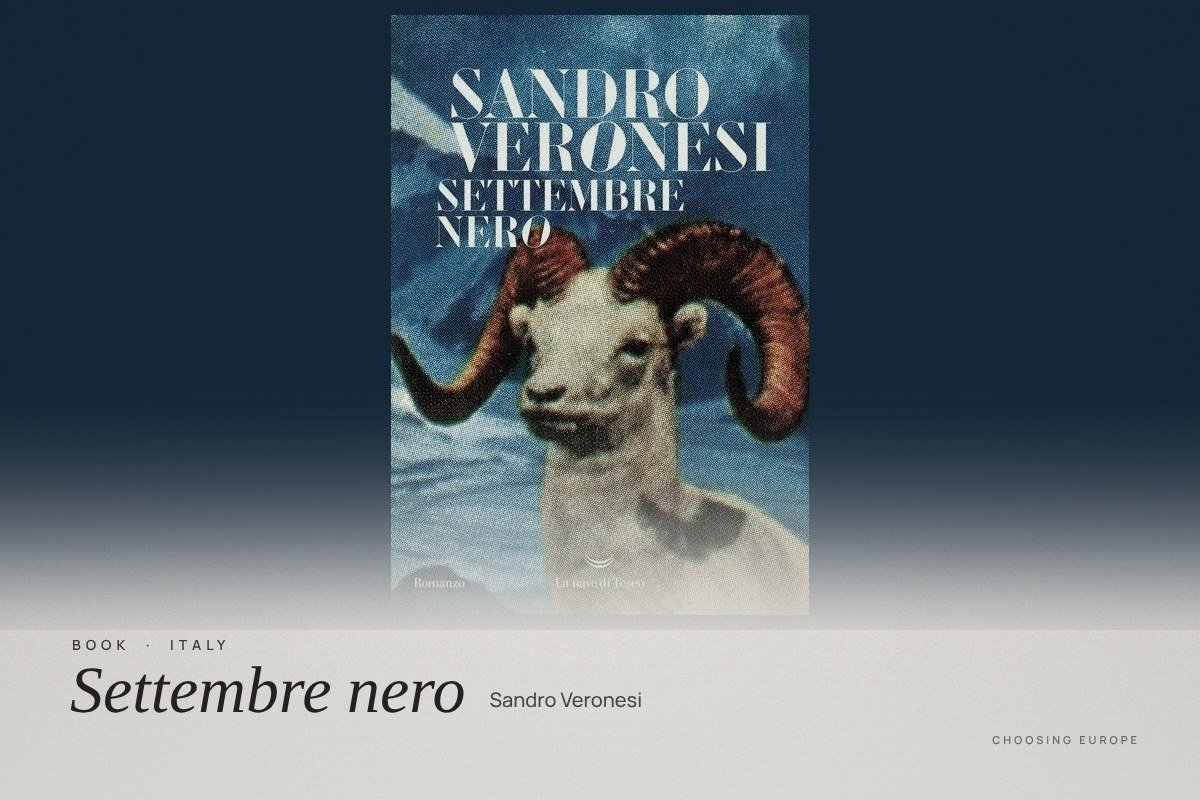
Settembre nero · Sandro Veronesi · Italy (2024)
There is a kind of summer, when you’re a kid, that only shows its real weight years later, once you finally have enough distance to look back and understand what happened.
That is the summer Sandro Veronesi writes about, through the eyes of Gigio Bellandi, twelve years old, spending what turns out to be the last happy summer of his family’s life on the Tuscan coast.
It’s 1972, in Versilia. Gigio is discovering music, books, that restless feeling you can’t quite name yet, and his first crush, on a girl named Astel Raimondi.
Everything feels enormous, the way things only can at that age.
Meanwhile, far from that beach, history is about to crash in the worst way possible: the Munich Olympics, and the attack that gives the book its title.
Veronesi, who’s won Italy’s Premio Strega twice, doesn’t rush toward the tragedy. He takes his time with the ordinary magic of that last summer instead, the music, the small rituals of being twelve, so that when the ending finally arrives, it hits with the full weight of everything that came before.
Part childhood story, part quiet historical novel, built out of the small objects and songs that make a summer feel real.