The sound of Europe
Choosing Europe has a clear mission: to promote European culture and industry while strengthening our sense of belonging. We want to highlight the art, ideas and products created within our shared space.
However, fulfilling this mission creates a difficult dilemma. If we only use European platforms and tools, we reach a small audience that already shares our values. To be truly influential, we must go where the public is, even if that means using devices and networks from other geographies.
The practical question is simple: is it better to reach ten people in a perfectly aligned space or one hundred people where the conversation is already happening?
Choosing Europe exists to be part of that wider dialogue. You can help us navigate this challenge in two ways.
- Reply to this post with your thoughts on this dilemma. You can write in English or in your own language as we read every message.
- Forward this newsletter to one person who might find value in our content. Sharing this work with just one friend is a powerful way to help our community grow.
In this issue
💡 Focus: European headphones and the acoustic industry.
📖 Book: Amatissime by Giulia Caminito · Italy 🇮🇹 (2022): Giulia Caminito explores how the literary legacy of great women writers shapes our modern identity.
🎬 Film: Crossing (Crossing) · Sweden 🇸🇪 (2024): Levan Akin explores the search for a lost relative through the streets of Istanbul.
📺 Series: Moresnet (Moresnet) · Belgium 🇧🇪 (2024): Frank Van Passel explores how a mysterious prophecy affects a group of friends in a border town.
🎵 Music: Mesdames, Messieurs by Sam Sauvage · France 🇫🇷 (2026): Sam Sauvage explores the revival of French chanson through a modern electronic lens.
🎙️ Podcast: How feminist economics could change Europe · The Europeans · 🇪🇺 English: A discussion on how European leaders could redefine value by prioritising wellbeing over capital.
A small side note
If you are still using Google Translate, you may want to try DeepL
It was launched in Cologne in 2017, and its neural translation technology is developed and maintained in Germany. 🇩🇪
The sound of Europe 🎧
For decades, consumer electronics followed a familiar pattern: design in the West, manufacture in Asia. Headphones are no exception. Today, most of them are assembled in Asian factories, even when the brand itself is European.
That reality does not automatically mean poor quality. But it does change something important. When engineering, prototyping, and assembly happen in the same place, the feedback loop between designers and manufacturers is immediate. A problem found on the production line can be solved by the engineers down the corridor. Details that would be lost in translation over thousands of miles are caught in conversation over lunch.
A small group of European companies still works this way. They design their headphones, build their own acoustic drivers, and assemble the finished product within Europe. That choice is deliberate, and almost always more expensive. Below are the brands that still keep a meaningful part of that process on the continent.
Choosing Europe is a newsletter about conscious purchasing decisions in favour of the European industrial ecosystem. We have no commercial relationships with any brand mentioned in this publication.
Our European Choice
beyerdynamic · Germany 🇩🇪
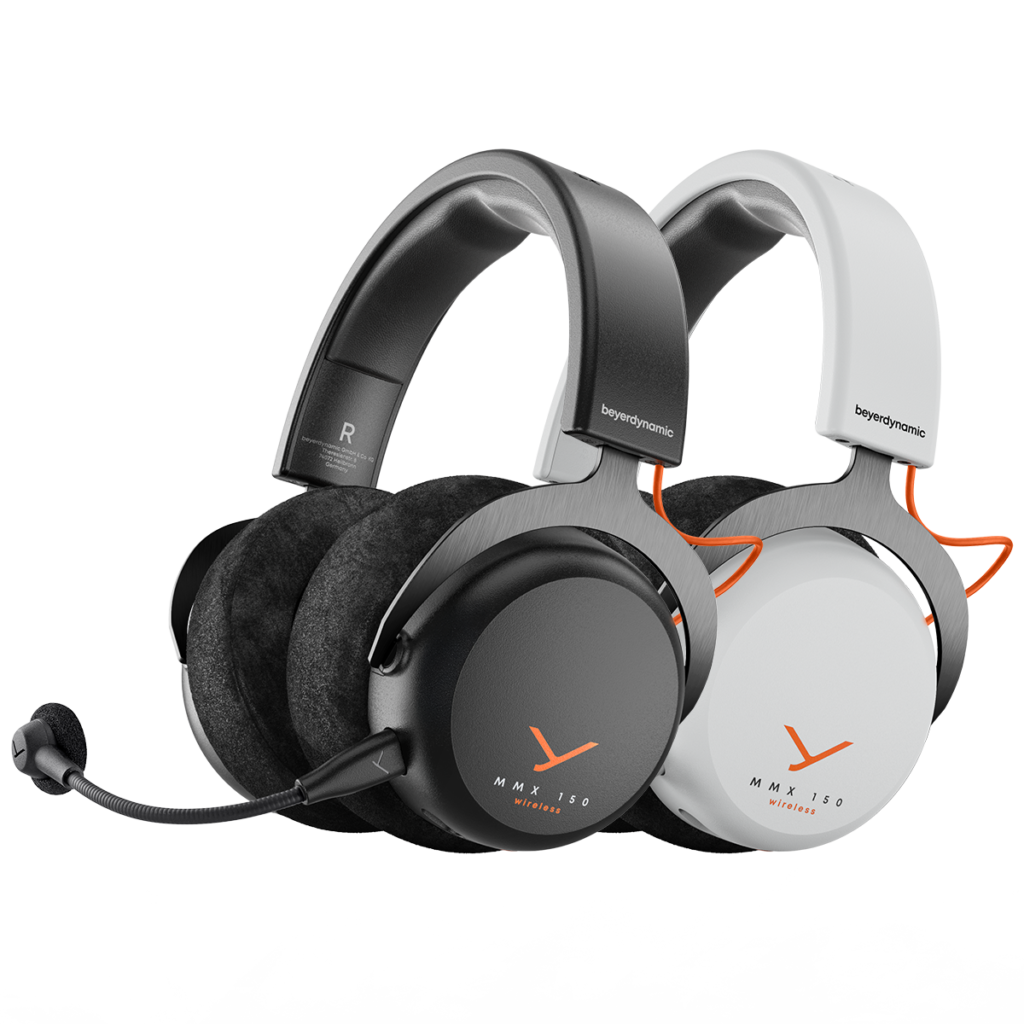
Founded in Berlin in 1924 and now based in Heilbronn, beyerdynamic remains one of the classic names in professional audio. Several of its studio headphones, including the well-known DT 770 PRO series, are manufactured by hand in Germany and designed with replaceable parts to extend their lifespan.
Focal · France 🇫🇷
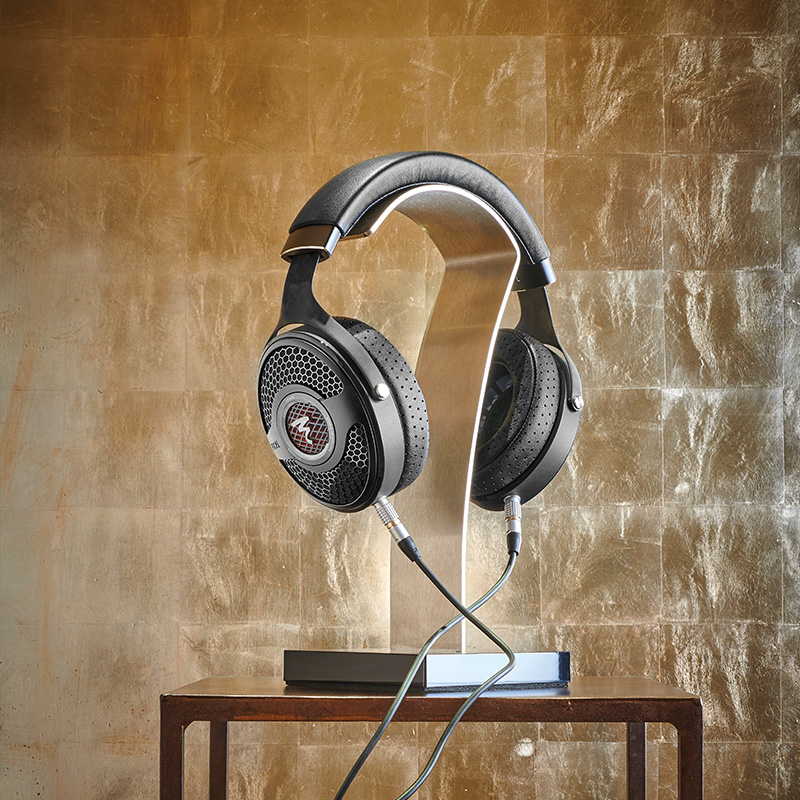
Focal, based in Saint-Étienne, is one of the rare audio companies that designs and manufactures its own drivers as well as the finished headphones. Its high-end models, such as Utopia or Clear, are produced in France and aimed at the global audiophile market. It is not a product that everyone can afford.
Sennheiser · Germany 🇩🇪
Sennheiser’s audiophile headphone production is centred in Tullamore, Ireland. The facility manufactures key transducers and assembles several of the company’s high-end headphones under the same roof, including models from the HD 600 and HD 800 lines.
Meze Audio · Romania 🇷🇴
Founded in 2011 by industrial designer Antonio Meze in Baia Mare, in the Maramureș region of northwest Romania, Meze Audio has become a respected name in the audiophile sector. Final assembly of all headphones takes place by hand in Baia Mare. Every part on the chassis is designed to be disassembled and serviced, and Meze openly describes its goal of making headphones that can be passed on to the next generation rather than discarded.
OLLO Audio · Slovenia 🇸🇮
OLLO Audio is a small Slovenian manufacturer specialising in reference headphones for audio engineers. Production is deliberately small-scale and focused on professional monitoring equipment assembled in Europe. Spare parts for every model OLLO has ever made remain available, and the company backs its headphones with a five-year warranty. It has no wireless products and no noise-cancelling range — a deliberate focus on the professional monitoring market, and on making products built to last.
Bang & Olufsen · Denmark 🇩🇰
The company’s design and engineering centre remains in Struer, Denmark, although large-scale production of many products takes place in Central Europe or Asia depending on the product line.
Bowers & Wilkins · United Kingdom 🇬🇧
The brand’s loudspeaker heritage remains strongly British, with certain flagship speakers still manufactured in England. Most headphone production, however, relies on international manufacturing networks.
AIAIAI · Denmark 🇩🇰
AIAIAI is a Danish company known for the TMA-2, a modular headphone system that lets users swap individual components — drivers, ear pads, headbands, cables — instead of replacing the entire product. Design and development happen in Denmark. Components are not manufactured there, but AIAIAI is transparent about sourcing responsibly and reached a notable milestone in 2024 by using 100% post-consumer recycled plastics in its speaker units.
Fairphone · Netherlands 🇳🇱
Fairphone extended its repairability philosophy to audio with the Fairbuds XL. The headphones are modular and designed so users can replace the battery and ear pads themselves. Production is global, but the design approach reflects the company’s broader sustainability model.
Repairability is becoming the norm
European manufacturers have traditionally placed strong emphasis on durability. Part of that comes from industrial culture; part of it now comes from regulation.
The European Union has adopted new “right to repair” rules aimed at extending the lifespan of consumer products. The legislation requires manufacturers of certain goods to provide spare parts and offer repairs at reasonable conditions even after the warranty period has ended.
Headphones are not yet among the product categories covered. The first phase of the regulation focuses mainly on household appliances and consumer electronics such as smartphones.
Even so, several European audio companies have long designed their headphones with repairability in mind. They have built products with replaceable components and long-term servicing as part of their design philosophy, not as a legal requirement. In that sense, the regulation is simply moving in the same direction these manufacturers have followed for years.
Choosing European audio equipment is therefore also a decision about longevity: a product designed to last, supported by companies that expect it to remain in use for many years.
The cultural recommendations for this issue follow below.
🎬 Films
Crossing · Sweden 🇸🇪 (2024)
Levan Akin (🇬🇪 Georgia) follows a retired teacher from Georgia who travels to Istanbul in search of her missing niece. What begins as a family search gradually becomes a quiet portrait of the city and of the people who inhabit its margins.
Akin builds the film through small encounters and shifting relationships, letting Istanbul’s streets connect characters from different generations and backgrounds. The result is a humane and attentive story about identity, belonging and the fragile ways strangers come to help one another.
If you want more
- Grand Tour · Portugal 🇵🇹 (2024): Miguel Gomes follows a British officer across Asia in a visual journey about love and escape.
- Islands · Germany 🇩🇪 (2025): Jan Speckenbach examines the complex emotional landscape of a woman searching for her missing husband.
- Quisling: The Final Days (Quislings siste dager) · Norway 🇳🇴 (2024): Erik Poppe details the psychological trial of the most famous collaborator in Norwegian history.
📺 Series
Moresnet · Belgium 🇧🇪 (2024)
When Ben returns to his childhood village after his father’s death, he and his old friends dig up a time capsule they buried twenty years earlier. Inside, they find his brother’s diary. On the last page: a list of names, with the dates each of them will die. All within ten days.
The series, directed by Frank Van Passel and shot in the borderlands where Belgium, Germany and the Netherlands meet, is less interested in the supernatural mechanics of a death list than in what such knowledge does to people. The horror here is not the prophecy itself but the fractures it reopens: old guilt, buried secrets, the residue of a violence no one ever properly addressed.
If you want more
- Berlín · Spain 🇪🇸 (2023): A Money Heist prequel following the charming, amoral Berlin across a jewel heist in Paris.
- Die Kaiserin (The Empress) · Germany 🇩🇪 (2022): A deliberately anachronistic reimagining of Empress Elisabeth of Austria-Hungary, deliberately anachronistic and unafraid of emotion.
- The Man Who Played with Fire · Sweden 🇸🇪 (2024): A documentary series that follows former diplomat Jan Stocklassa as he continues the investigation Stieg Larsson left unfinished into the unsolved 1986 assassination of Swedish Prime Minister Olof Palme.
📖 Books
Amatissime · Giulia Caminito · Italy 🇮🇹 (2022)
Giulia Caminito’s Amatissime, published by Giulio Perrone Editore, is a hybrid work of literary essay and memoir centered on five Italian women writers: Elsa Morante, Natalia Ginzburg, Paola Masino, Laudomia Bonanni, and Livia De Stefani. The book reconstructs aspects of their lives and writing while intertwining them with Caminito’s own reading life, memories, and literary formation. Several reviews also note the presence of Rome as an important cultural and personal setting in the book.
If you want more
- Idyllen · Ilja Leonard Pfeijffer · Netherlands 🇳🇱 (2025): A poetic collection exploring the search for beauty in a rapidly changing world.
- Hey Hafni · Helle Helle · Denmark 🇩🇰 (2025): Helle Helle examines the quiet complexity of a road trip through the Danish landscape.
- Das Licht in den Birkenwäldern · Romy Fölck · Germany 🇩🇪 (2024): Romy Fölck details a moving family story set against the atmospheric backdrop of northern Germany.
🎵 Music
Mesdames, Messieurs · Sam Sauvage · France 🇫🇷 (2026)
Sam Sauvage explores the revival of French chanson through a modern electronic lens. This artist is currently beloved in French indie forums for his authentic persona and has avoided the controversies typical of the Parisian scene.
If you want more
- Samen Tegen Elkaar · Goldband · Netherlands 🇳🇱 (2024): Goldband combines pop with social commentary and remains a massive success in the Benelux region despite minor scandals regarding their wild stage presence.
- LUX · Rosalía · Spain 🇪🇸 (2025): Rosalía continues her global dominance by blending avant-garde electronics with traditional roots. She is currently one of the most critically acclaimed and successful European artists worldwide.
- Afro Fado · Slow J · Portugal 🇵🇹 (2023): Slow J creates a powerful cultural bridge between African rhythms and Portuguese fado. He is a respected figure in Lisbon for his artistic integrity and independence.
🎙️ Podcast
- How feminist economics could change Europe · The Europeans · 🇪🇺 English (2026): A discussion on how European leaders could redefine value by prioritising wellbeing and community over capital. The episode analyzes the transition from generating wealth to supporting the lives of citizens.
- Autophagie: je me mange donc je vis · La Science, CQFD · 🇫🇷 French (2026): Experts explain the cellular mechanism of autophagy and its vital role in human immunity and the prevention of neurodegenerative diseases.
- ¿Es posible vivir sin plásticos? · Podium Podcast · 🇪🇸 Spanish (2025): This report examines the presence of plastic in daily life and evaluates if it is realistic for European companies and citizens to eliminate its use.
- Die Energiewende taugt nicht zum Kulturkampf · F.A.Z. Wissen · 🇩🇪 German (2025): An interview with energy expert Jan Rosenow about the global trends in decarbonisation and the specific hurdles facing the German energy transition.
✨ Final notes
We have decided that Choosing Europe will be completely free and open to everyone. We want these stories and ideas to reach as many people as possible without any barriers. If you enjoy this newsletter the best way to support it is by sharing it with friends or colleagues who might find it useful.
You can also find us on Mastodon 🐘 or join our community on Telegram ✈️.
You can also simply reply to this post. We read every message and appreciate your feedback as we build this project together. You can write in English or in your own language as we read every message.
Thank you for Choosing Europe.