At a glance
- From: Albania. The author now teaches in London.
- Year: 2021
- Length: about 330 pages
- Language: written in English, translated into more than 35 languages
- For fans of: Persepolis, Educated
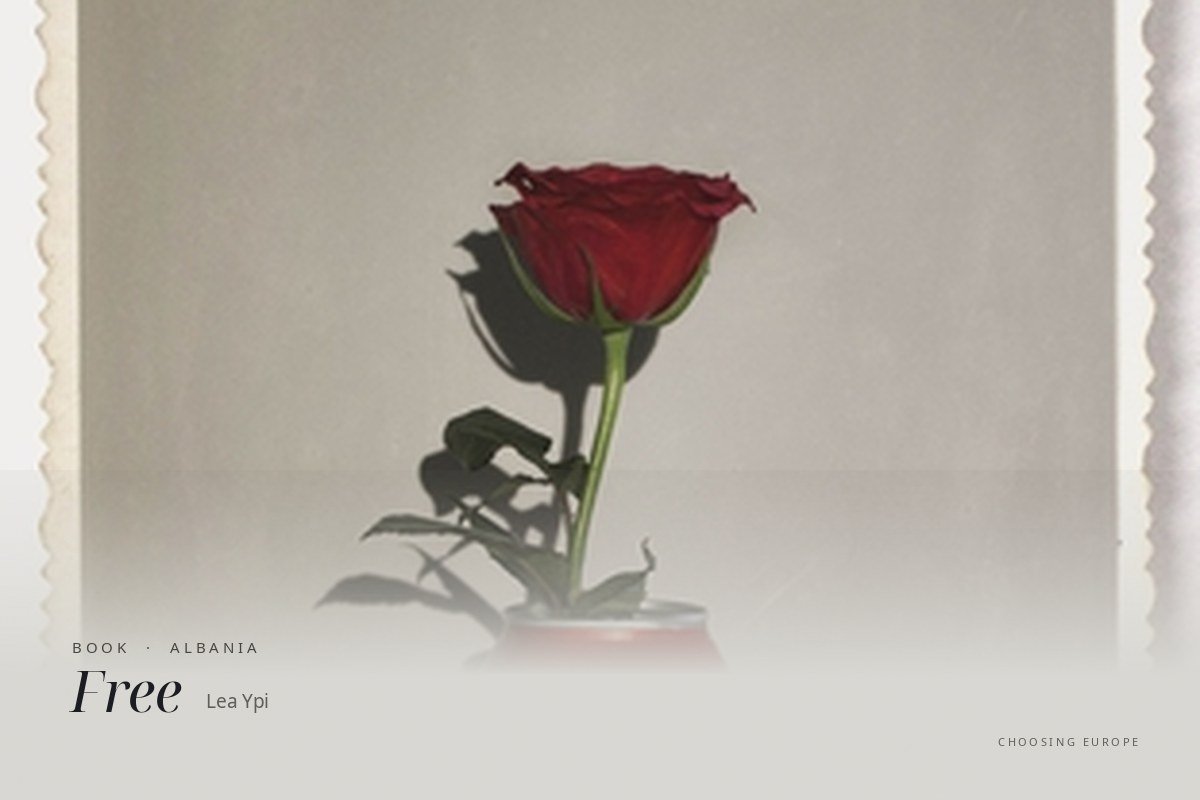
In December 1990, an eleven-year-old girl runs to the statue of Stalin in her town and hugs it. Protesters have already taken off its head. She loves Stalin, she trusts her teacher, and she calls the dictator Enver Hoxha “Uncle Enver”. She does not understand why people are pulling down the statues.
This is how Free begins. Lea Ypi grew up in Albania, Europe’s last Stalinist state, and she believed what she was told at school. At home, her family spoke in a strange code. When relatives had “graduated from university”, it meant they had come out of prison. She only understood it when the regime fell.
Then the system fell. Freedom arrived, and with it came markets, unemployment, mass emigration to Italy, pyramid schemes that took people’s savings, and, in 1997, a civil war. The book then asks a difficult question: if one system lied to her and the other failed her family, what does “free” really mean?
Ypi tells all of this with a lot of humour and a light touch, even when the story is painful. Today she is a professor of politics and philosophy at the London School of Economics. The book won the Ondaatje Prize in the UK and was shortlisted for the Baillie Gifford Prize.
Not everyone liked it. Some Albanian commentators accused Ypi of being too soft on communism, a reading she rejects. Read it and decide for yourself.
Where to start
Read the first chapter, the one with the statue, and you will quickly know if this book is for you. If you finish Free and want more, her next book, Indignity (2025), reimagines the life of her grandmother.
If you like this, try these from Europe
- Second-hand Time 🇧🇾 (2013): Svetlana Alexievich, Nobel Prize winner, collects the voices of ordinary people after the end of the Soviet Union.
- Kairos 🇩🇪 (2021): Jenny Erpenbeck’s novel about a love story in East Berlin as the GDR comes to an end. International Booker Prize 2024.
- Chronicle in Stone 🇦🇱 (1971): Ismail Kadare, Albania’s best-known writer, tells the story of a boy growing up in a stone city, based on his native Gjirokastër, during the Second World War.
Where to find it in Europe
You can read it in your own language. Here are some of the European editions:
- English: Free, Penguin
- Albanian: Të lirë, Botime Dudaj
- German: Frei, Suhrkamp
- French: Enfin libre, Seuil
- Spanish: Libre, Anagrama
- Italian: Libera, Feltrinelli
- Dutch: Vrij, De Bezige Bij
- Polish: Wolna, Czarne
Your local bookshop can order any of them, and you can also ask for it at your public library.
The European context
Under Enver Hoxha, Albania broke first with the Soviet Union and then with China, and became one of the most isolated countries in the world. Most Europeans still know very little about it. Free opens a door into that world, and it does so from inside a family, not from a history book. In 2025-2026, Ypi holds an annual chair at the Collège de France in Paris called “The Invention of Europe through Languages and Cultures”.
More about the book: https://leaypi.com/free/
Also on Choosing Europe
- Book: Checkout 19 · Claire-Louise Bennett 🇮🇪: another book about a girl growing up and finding her own voice.
- Book: Settembre nero · Sandro Veronesi 🇮🇹: another childhood that collides with history.