Exploring European Music Streaming Beyond the Global Giants
We are not surprised by the success of apps that identify American products in order to suggest European alternatives. In fact, this reflects our work every week in this newsletter as we present quality alternatives made in Europe that contribute to the development of our region.
We will leave that topic for another time. In this issue of Choosing Europe, we turn to another subject that is just as compelling: music streaming platforms. This did not start as a planned cover story. Here is how we arrived at this topic.
We have been considering the creation of a monthly playlist under the name Choosing Europe, bringing together all the weekly music recommendations from that month. However we immediately faced an important decision about where we should host it. Should we use one of the Big Tech platforms?
Without meaning to, we would be contradicting the spirit of this newsletter. Something similar happened when we chose to host Choosing Europe on Substack. Regarding that subject we are still working on our own solution which is getting closer. It will likely be ready later in February or in early March.
In the future, we may do something on Funkwhale. We are committed supporters of the Fediverse and open-source software. But now is not the right time for that.
So we began researching which European music streaming platform could host our playlist. Although the monthly playlist remains a future project, that research has provided the foundation for the main article this week.
Welcome to Choosing Europe #3: European Music Streaming Platforms.
In this issue
💡 Focus Moving away from the big tech platforms that dominate our listening habits and exploring European alternatives for music streaming that offer a different relationship with artists and data.
📖 Book Flesh · David Szalay · United Kingdom 🇬🇧 (2026) A sharp and personal look at the physical and emotional realities of modern life across different European landscapes.
🎬 Film Sentimental Value · Norway 🇳🇴 (2025) A complex family drama about an estranged father and his daughters, exploring whether real pain can be turned into art or if it just creates more distance.
📺 Series The Playlist · Sweden 🇸🇪 (2022) A fictionalised account of how a small Swedish start-up challenged the giant music labels and completely changed how the world consumes music.
🎵 Music 4 (The Pink Album) · Lukas Graham · Denmark 🇩🇰 (2023) A grounded pop record that trades big production for honest stories about family and getting older.
🎙️ Podcast L’Heure du Monde · France 🇫🇷 One of Europe’s most respected daily news podcasts, providing deep context and human stories behind the headlines.
A small side note
If you are trying Bluesky and Twitter X no longer feels right, you might consider Mastodon. It is open source, free from algorithmic feeds, and built around real communities. Founded in Germany and now run through independent servers across the world, operated by individuals. 🇩🇪🇪🇺
European Alternatives for Music Streaming
The European streaming market is highly concentrated. According to the 2024 antitrust decision published by the European Commission regarding music streaming rules, Spotify accounts for roughly 56% of all music streaming subscriptions in Europe.
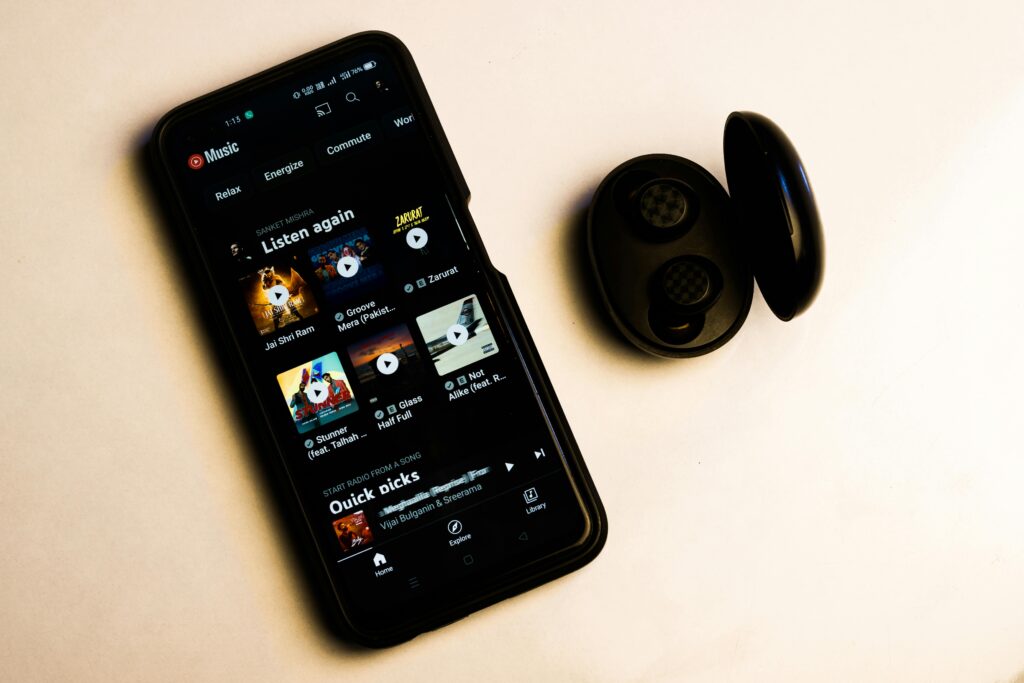
The rest of the market is largely divided among American corporations, with Amazon taking around 19%, while Apple Music and YouTube Music hold smaller shares of 11% and 8%, respectively.
European-based services represent only a tiny fraction of total subscriptions. In practice, this means that the listening habits of most Europeans are mediated by platforms governed outside our region.
To be clear from the beginning, Spotify was founded in Sweden but now operates within financial structures that place it firmly inside the global Big Tech ecosystem.
Similarly, Tidal was founded in Norway, but it now holds a marginal European market share of less than 1% and is controlled by American capital.
Both now operate within financial and corporate structures that place them outside the European sphere of influence. The cultural and economic centre of gravity is no longer European for these companies.
The question is whether meaningful European alternatives exist for a daily user. They do. Platforms such as Deezer, which holds 4% of European subscriptions, and SoundCloud, with 1%, are available. They are smaller, but they are viable.
The Challenge of Distribution and Pricing
Changing your music provider is not a simple task because the infrastructure of the market is controlled by Apple and Google. Since most users download their applications through the App Store or Google Play, a structural dependency exists regardless of which platform you choose. These gatekeepers influence how apps are distributed and how payments are processed.
Cost is not a deciding factor either. In Europe, standard individual subscriptions across the industry are typically 11.99 euros per month. European platforms do not offer a significant discount compared to their American competitors because they operate within the same economic pressures.
The real value of choosing a European alternative is found elsewhere. It is a matter of corporate governance, the physical location of servers, the models used to pay artists, and the editorial philosophy behind the music catalogue.
Now that we understand the market barriers and the importance of digital sovereignty, let us examine the specific alternatives available to you and how they compare in daily use.
Please note that our recommendations never include affiliate links and we receive no economic support from these companies. This is simply a fair and honest opinion based on our research and personal experience.
Deezer · France 🇫🇷
Founded in Paris, Deezer is a realistic substitute for Spotify for the average listener.
It offers a catalogue of more than 120 million tracks, comparable to that of any global competitor. In practice, I have found all the music I was looking for without difficulty. The audio quality is very good and on par with other major platforms.
The app itself may feel slightly less intuitive than some competitors at first. Navigation is not always as smooth as on the largest global services. That said, nothing gets in the way of simply listening to music. Once you become familiar with the interface, the experience is solid and reliable. After some time using it daily, it does not feel inferior to other apps.
On a broader level, Deezer remains a European company, with much of its infrastructure based in Europe. For those who care about where their data is handled, that is an additional factor worth considering.
Qobuz · France 🇫🇷
Also French, Qobuz takes a different path by focusing on sound quality rather than mass-market convenience. While mainstream platforms compete mainly through algorithms, Qobuz builds its identity around audio fidelity and strong editorial content.
It specialises in high-resolution streaming, offering files that go well beyond standard compressed formats. Its catalogue includes more than 100 million tracks and covers most mainstream releases. The real difference lies in the technical quality of the audio and in the curated approach to presenting music.
I am not someone who usually prioritises high-fidelity listening, but if sound quality matters most to you, Qobuz makes a clear case. Even without professional equipment, the attention to detail is noticeable.
Qobuz also pays artists more per stream than Spotify. Various estimates indicate that musicians need fewer plays on Qobuz to generate the same level of income.
For listeners who care about both sound quality and fairer compensation for creators, Qobuz remains one of the strongest European options.
SoundCloud · Germany 🇩🇪
Berlin has become an important centre for digital music in Europe, and SoundCloud is its most visible platform. It continues to play a central role in independent scenes, DJ culture and for new artists who choose to work outside traditional labels.
SoundCloud is more than a streaming service. It is a place where music is uploaded, explored and discovered. With more than 300 million tracks, including remixes, demos and live recordings, it offers content that large algorithm-driven platforms often overlook.
It may not replace your main music app. But if you are interested in diversity, emerging artists and the more experimental edges of European sound, SoundCloud remains well worth your attention.
IDAGIO · Germany 🇩🇪
Also based in Berlin, IDAGIO focuses only on classical music. It addresses a problem that general platforms never fully solved: metadata.
In classical music, the usual song/artist/album structure is not enough. IDAGIO lets you search by composer, conductor, orchestra, specific work or even movement. For classical listeners, this is not a luxury. It is essential.
An ethical note 🇪🇺
The last two options are not realistic choices for the mass market today. They reflect an ethical intention rather than a mainstream product, but they deserve attention for what they are trying to build in terms of digital independence.
Resonate was founded in Berlin as a cooperative platform designed to return control to artists and listeners. Its administrative structure now operates from Ireland, but its cooperative spirit remains central. It works with a “stream to own” model. Instead of paying an endless monthly subscription, you pay a small amount per listen until, after a certain number of plays, the track becomes yours. The aim is to create a fairer system of remuneration than the one offered by the dominant platforms.
Funkwhale is free and open source software that began in France and is developed by a European community of volunteers. It is built on federated technology, which means no single company controls the network or the data. Parts of its development have received support from European Union funding programmes focused on strengthening open digital infrastructure. I use Funkwhale regularly, but it is still more comfortable for curious users than for casual listeners.
These are not the best platforms for mainstream commercial music. But for those who care about ethics and digital sovereignty, they point in an important direction. The way we consume art is a choice, and that choice has social and political consequences.
With the main part of this issue behind us, it is time to turn to culture. Here are a few films, series, albums, podcasts and books made in Europe that are well worth your time.

🎬 Film
Sentimental Value · Norway 🇳🇴 (2025)
What happens when your family no longer fits the person you are trying to become? In this film, we return to Oslo to follow two sisters and their father, a once-famous actor who is now attempting a comeback.
The central role is played by Renate Reinsve, known for The Worst Person in the World. She plays a daughter who is trying to move forward with her life while her father behaves as if everything around him were part of a performance. Old tensions resurface, and everyday conversations reveal how difficult it can be to step out of family roles that were defined years ago.
The film is observant and at times unexpectedly funny. It feels close to real life because it deals with something many people understand: the effort to build your own identity while carrying the weight of where you come from.
A good choice if you want something thoughtful that still feels familiar.
If you want something else
Vermiglio · Italy 🇮🇹 (2024): A calm and visually striking story set in a remote Alpine village at the end of the Second World War, where the arrival of a deserter unsettles a large family and reveals a disappearing way of life.
Band Together (Rondallas) · Spain 🇪🇸 (2026): A warm and intelligent comedy about adults in a small town who revive a traditional musical group, rediscovering community spirit and old rivalries along the way.
Veni Vidi Vici · Austria 🇦🇹 (2024): A dark and entertaining satire about a billionaire family who act as if the law does not apply to them, offering a sharp look at power and privilege today.
📺 Series
The Playlist · Sweden 🇸🇪 (2022)
After our focus on music streaming this week, The Playlist is the natural choice. The series tells the story of how a small Swedish start-up called Spotify challenged the major music labels and reshaped the way the world listens to music.
What makes it stand out is its structure. Each episode follows a different perspective: the ambitious founder, the industry executive, the lawyer, the programmer and the artist. There is no single version of events. Instead, we see a clash between technology, money and creativity.
It moves quickly and feels very current. At a time when Europe often seemed to lag behind Silicon Valley, a group of entrepreneurs in Sweden managed to build one of the few global tech companies born on our continent.
If you want something else
The Collapse (L’Effondrement) · France 🇫🇷 (2019) An intense series that imagines what happens when society suddenly try to survive without electricity, food or basic services.
Heaven. A Year in Hell (Niebo. Rok w piekle) · Poland 🇵🇱 (2025) A psychological thriller based on a true story from the 1990s about a young man who joins a religious sect.
Norsemen · Norway 🇳🇴 (2016) A very funny comedy that follows a group of Vikings in the year 790.
📖 Book
Moral Ambition · Rutger Bregman · Netherlands 🇳🇱 (2024)
What if ambition were measured not by salary or status but by usefulness? Rutger Bregman argues that many careers feel empty not because we fail but because we aim too low. In his view a generation full of talent is often absorbed by comfortable roles while the most urgent problems of the world remain understaffed.
The argument is simple and concrete. Our professional choices matter. If intelligence and energy flow mainly into sectors driven by profit or prestige society loses the capacity to act where it is most needed. Bregman invites readers to rethink what success means and to see work as a tool for real impact.
The tone is clear and accessible. It is less a moral lecture than a practical call to raise our standards.
Original language: Dutch (Morele ambitie). Translations: Moralische Ambition (DE), Ambition morale (FR), Ambición moral (ES), Ambição Moral (PT).
If you want something else
Everyone Loves Clara (Tout le monde aime Clara) · David Foenkinos · France 🇫🇷 (2025) David Foenkinos explores the life of a woman who appears perfect to others. The novel captures the social atmosphere of modern European cities and the pressure of appearances in today’s society. Original language: French. Translations: Todos aman a Clara (ES).
The Granddaughter (Die Enkelin) · Bernhard Schlink · Germany 🇩🇪 (2021) The author explores the deep cultural and political divide between East and West Germany through a personal family story. This book analyzes how historical trauma and different ideologies still influence the identity of modern Europe. Original language: German. Translations: La nieta (ES), The Granddaughter (EN), La petite-fille (FR), La nipote (IT).
Flesh · David Szalay · United Kingdom 🇬🇧 (2026) In this interview with The Guardian, David Szalay describes himself as an insider-outsider, a perspective that defines his latest work. Born in Canada and raised in the UK but living in Budapest, he explores the physical and emotional realities of modern life across different European landscapes. The book analyzes the way contemporary society experiences intimacy and isolation in an increasingly connected yet fragmented world. Original language: English. Translations: Chair (FR), Nella carne (IT).
🎵 Music
4 (The Pink Album) · Lukas Graham · Denmark 🇩🇰 (2023)
Lukas Graham goes for a simpler approach here. The songs are built around piano and a voice that stays front and centre. The themes are everyday ones: family, routine, responsibility, and the strange feeling of getting older while life keeps moving.
It is not an album designed to impress with constant surprises. It works because it stays consistent and easy to follow. If you like pop that feels personal and song-led, this one makes sense as a full listen, not just a few singles.
If you want something else
Heartbreak Culture · Lenny · Czech Republic 🇨🇿 (2022) Lenny proves that pop music can still have a rock edge without losing its melody. Her voice is strong and the production is clean, making this a record that fits perfectly on international radio while keeping a distinct personality.
Bis einer weint · Bibiza · Austria 🇦🇹 (2024) This is the sound of Vienna right now. Bibiza mixes indie guitars with a rap attitude to capture the city’s nightlife. It is loose, direct, and full of local character, feeling more like a night out with friends than a studio project. (Sung in German).
El Madrileño · C. Tangana · Spain 🇪🇸 (2021) This album changed the conversation about Spanish pop. It mixes traditional styles like flamenco and rumba with modern beats, but it never feels like a history lesson. It is a smart, collaborative record that proves tradition can be the most modern thing of all. (Sung in Spanish).
🎙️ Podcast
L’Heure du Monde · France 🇫🇷
A daily news podcast from Le Monde that takes one topic and explains it with context, reporting, and real voices from the week. It is a good choice when you want more than headlines, but you still want something you can finish in one commute. (Language: French)
Recommended episodes for this week:
Procès en appel de Marine Le Pen : que faut-il retenir · L’Heure du Monde 🇫🇷 A clear explainer on what is at stake in the appeal and what to watch next in French politics. (Language: French)
11. Februar 2026, Die Wirtschaftspresseschau · Presseschau, Dlf Politik & Analyse 🇩🇪 A short roundup of what major newspapers are saying, with a strong focus on the EU economy this week. (Language: German)
POLAND: Fighter Jets-Drone Exchange & more, 12th Feb 2026 · Rorshok Poland Update 🇵🇱 A fast weekly briefing of Polish headlines, focusing on regional security and defense. (Language: English)
Welcome to the fediverse: Exploring Mastodon, ActivityPub and beyond · Thoughtworks Technology Podcast 🌍 A friendly explanation of the fediverse and how decentralized services connect through the ActivityPub protocol. (Language: English)
Ristretto Italiano, 3 febbraio 2026 · Ristretto Italiano 🇮🇹 A quick mix of Italian politics and public life, packing several current topics into one short episode. (Language: Italian)
Crise du logement en France : toujours plus de sans-abri · L’Heure du Monde 🇫🇷 A focused look at the housing crisis in major cities and why homelessness continues to rise. (Language: French)
Music Streaming in 2025: what is the value of music today? · Music Ally Focus 🇬🇧 A discussion on the current state of streaming, pricing pressure, and what platforms are betting on this year. (Language: English)
POLAND: New National E-Invoicing System & more, 5th Feb 2026 · Rorshok Poland Update 🇵🇱 A practical episode on a concrete policy change and what the new digital systems mean for daily life. (Language: English)
✨ A note for our readers
We have decided that Choosing Europe will be completely free and open to everyone. If you enjoy this newsletter, the best way to support it is by sharing it with friends or colleagues who might find it useful.
You can also find us on Mastodon 🐘or join our Telegram channel.
Thank you for reading Choosing Europe. Welcome.
Leave a Reply
You must be logged in to post a comment.